Live Demo
Red-Agent In Action
Natural language → proxy chain → security audit. No manual configuration required.
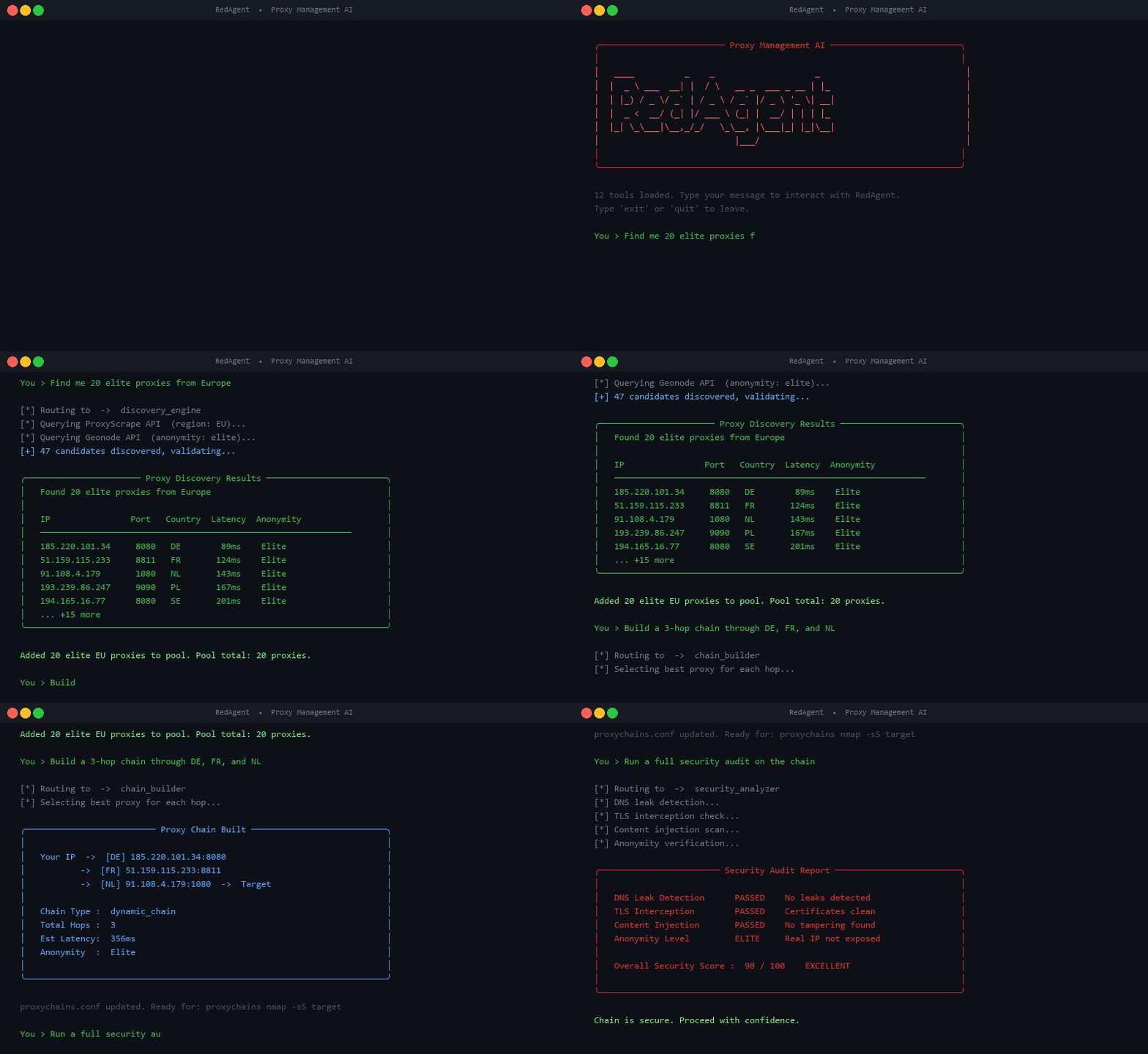
Natural language interface for proxy discovery, chain building, security auditing, and Tor routing. Stop managing configs manually — tell it what you need and it executes.
Natural language → proxy chain → security audit. No manual configuration required.
Red-Agent is an AI-powered proxy management system built for red teams, penetration testers, and bug bounty hunters. It wraps the entire proxy workflow — discovery, validation, chaining, security auditing, and Tor integration — behind a conversational natural language interface powered by DeepSeek AI.
Traditional proxy management requires juggling multiple tools, manual configuration files, and brittle automation scripts. Red-Agent replaces all of it. You describe your objective in plain English — "Find 50 elite proxies from Europe and check for DNS leaks" — and the agent handles every step of execution autonomously, maintaining context across your entire session.
Five integrated modules covering the complete proxy operations lifecycle — from initial discovery through security validation and proxychains integration.
Powered by DeepSeek AI, Red-Agent understands intent rather than syntax. Issue commands in plain English — it maintains full conversation history across your session so context carries forward automatically. Rich terminal UI with formatted panels and structured output.
Automated discovery from multiple sources including ProxyScrape API and Geonode API. Every proxy is actively verified before use — Red-Agent never gives you dead infrastructure. Continuous pool maintenance with automatic removal of failed proxies and health monitoring throughout your session.
Four-layer security audit pipeline running in parallel: DNS leak detection to confirm real IP protection, TLS interception detection to identify potential MITM proxy behaviour, content injection scanning to catch proxies that modify HTTP responses, and anonymity classification — transparent, anonymous, or elite tier.
Build sophisticated multi-hop proxy chains routing traffic through sequential nodes across multiple geographic locations. Three chain modes: strict (fail if any proxy fails), dynamic (skip dead proxies automatically), and random (randomize selection per connection). Generates ready-to-use proxychains configuration files for nmap, curl, and any other tool that supports them.
SOCKS5 integration with the Tor network with automatic verification via the Tor Project API. Use Tor as a standalone anonymization layer or integrate it as the final hop in a multi-proxy chain — routing traffic through your proxy infrastructure before exiting through Tor for maximum anonymization depth.
Full observability layer with structured logging and operational metrics. Proxy pool state is persisted to disk so your verified infrastructure survives session restarts. Report generation outputs structured summaries of pool health, audit findings, and chain performance for documentation and after-action review.
Red-Agent flows from natural language input through the DeepSeek AI layer into a unified tool registry, dispatching to five specialized subsystems that operate independently and report back to the agent context.
User intent in plain English — context preserved across session
Intent parsing, tool selection, context management
Routes commands to appropriate subsystem modules
Proxy pool, chains, audits, configs, reports
Red-Agent understands natural language across all operational categories. No flags, no syntax to memorize.